Before the visit
Keep the compartment closed and arrange suitable alternative frozen storage if it cannot maintain safe conditions. Do not chip ice with a sharp tool, apply a heat gun or remove internal panels.
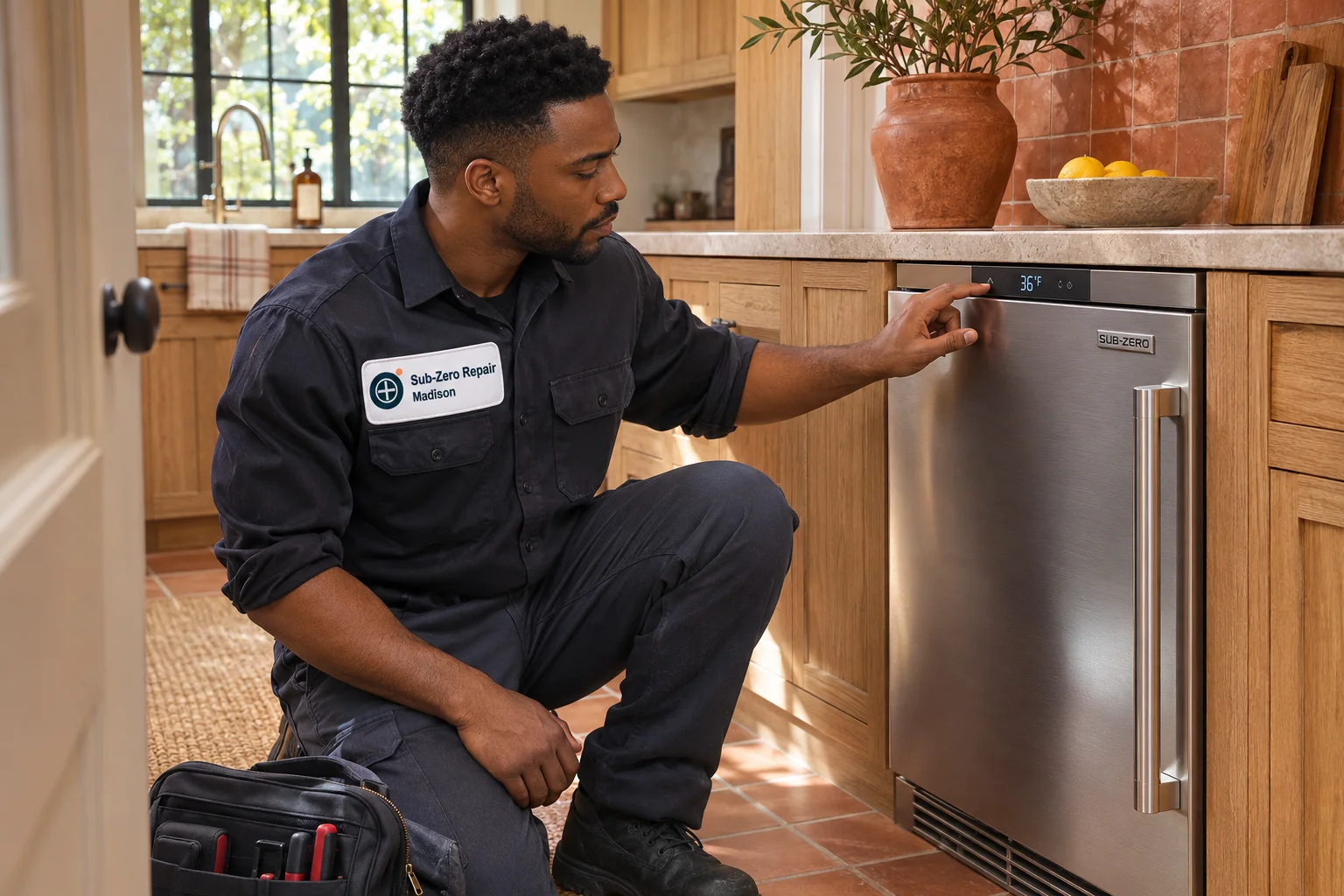
Clear a safe working area, keep any displayed message and mention custom panels or restricted access. Do not dismantle the appliance in preparation.
Protect, record, prepare
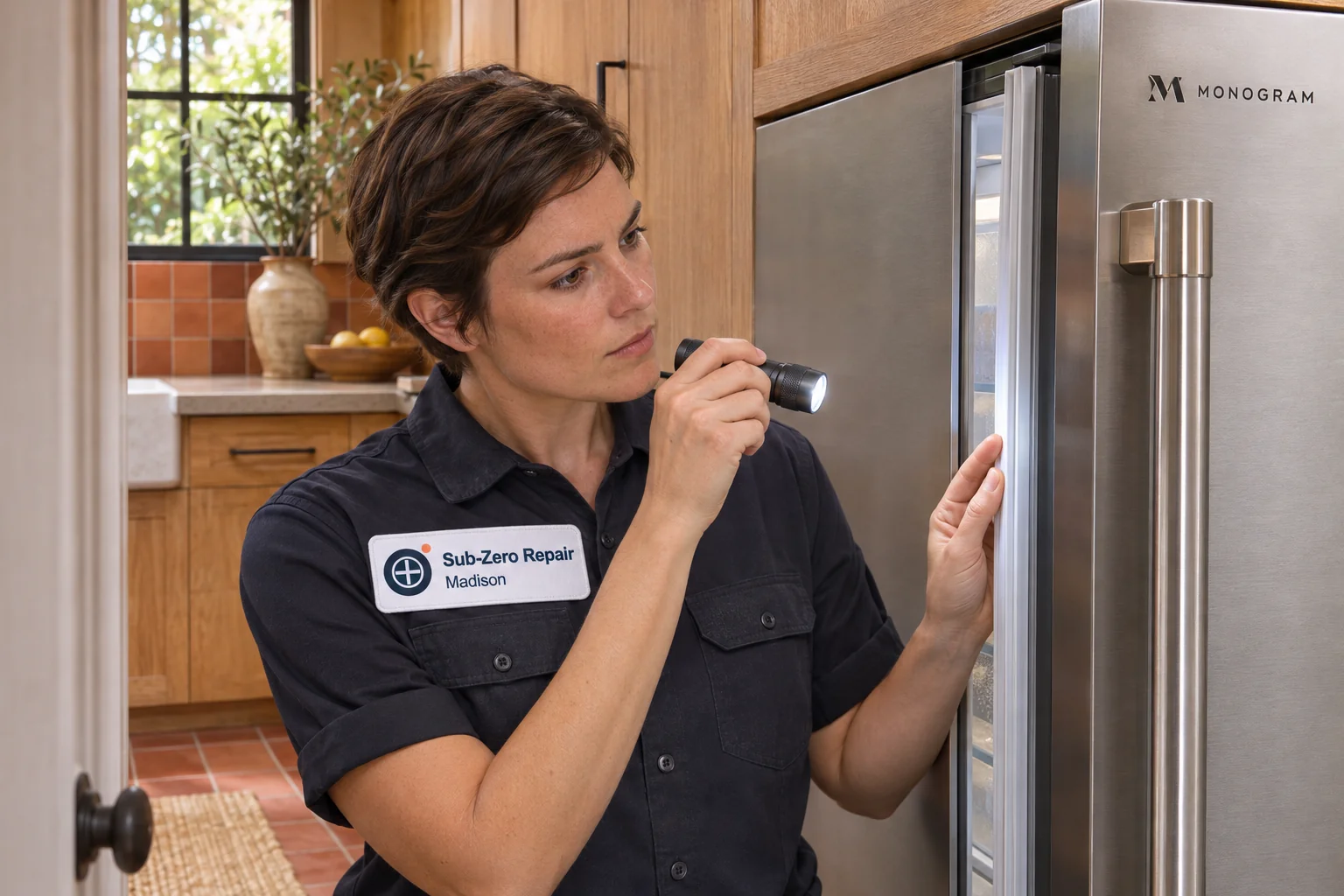
A frost pattern is evidence to describe, rather than a part diagnosis. Frost around a gasket presents a different starting point from a cabinet that warms without visible ice.
Identify the Monogram appliance and any separate zones, cooking modes or cycle stages involved. Include whether the equipment is built in and whether access is restricted.
What the inspection needs to establish
The technician adapts the inspection to the installation and reported behavior. These are areas to evaluate, not a list of parts to replace.
- Compare reported temperature changes and alarm timing.
- Inspect sealing surfaces, drawer travel and airflow.
- Test the applicable fan, defrost, sensor and control circuits.
- Investigate cooling-system performance when supported by the earlier checks.
What you may be noticing
Begin by protecting contents and making the area safe. Then describe the appliance configuration and the affected function. Preparation should reduce disruption without dismantling the installation.
- An alarm that returns after it is acknowledged.
- An unusual run-time or cycling pattern.
- Ice building up where the drawer meets the cabinet.
- Food softening despite a low selected temperature.
- A heavy frost patch near a door or drawer.
Diagnosis, approval and repair
The diagnostic/service call is $149, credited toward an approved repair. After diagnosis, you receive an itemized repair quote before work begins. Genuine OEM parts are used.
Availability, including same-day or emergency requests, depends on the address and schedule. Sending a request does not reserve an appointment.
The 1-Year Parts & Labor Warranty covers parts installed and labor performed under normal use. It excludes new unrelated faults, misuse, power surges and work performed by others after the visit.
Sealed-system and refrigerant work is performed by an EPA-certified technician. Manufacturer names identify equipment serviced; this is independent service.